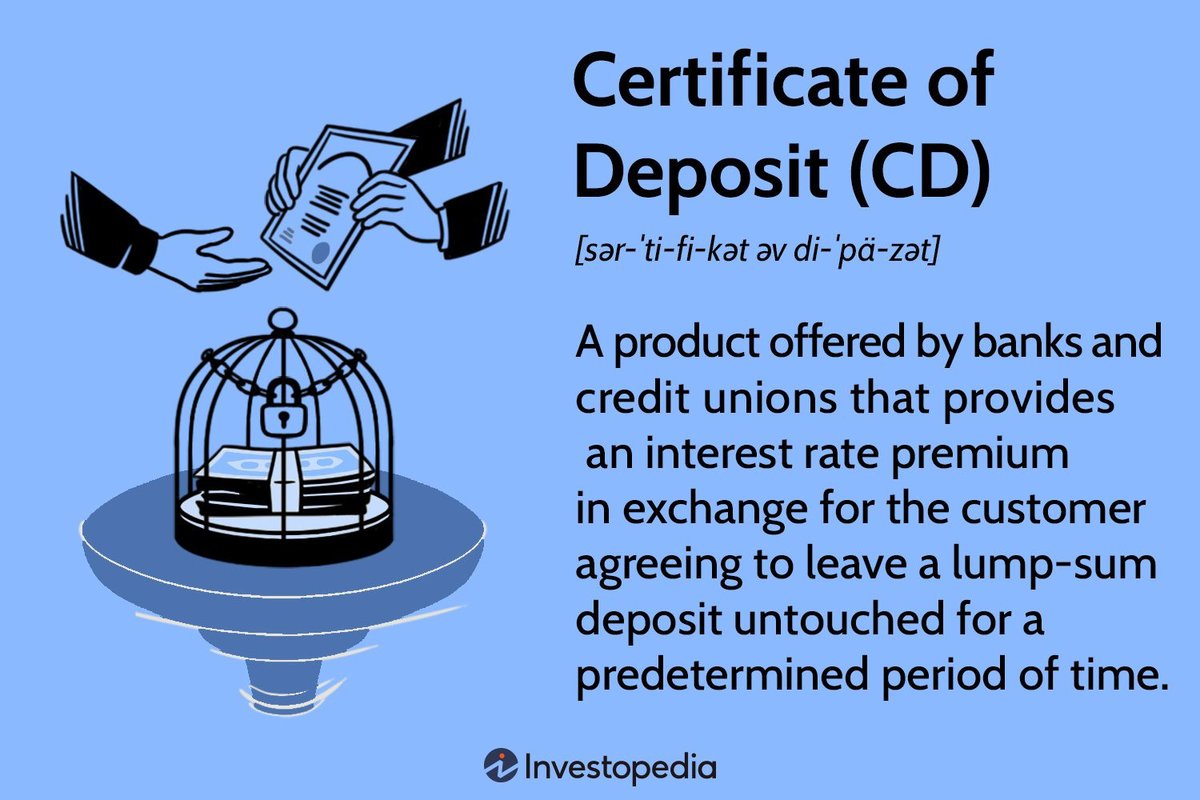
In today's ever-shifting financial landscape, a critical question on many minds is: are CDs worth it right now? The short answer for many looking to safeguard and grow their savings is a resounding yes, but with an urgent caveat. With interest rates forecasted to continue their decline, Certificates of Deposit (CDs) present a unique, time-sensitive opportunity to lock in competitive, guaranteed returns that are significantly higher than traditional savings accounts.
CDs stand out as a secure haven for your cash, offering predictable growth without the volatility of the stock market. Unlike a regular savings account, a CD requires you to commit your money for a fixed term, in exchange for a fixed interest rate. If you're wondering how these savings vehicles work, we delve into the fundamentals in our comprehensive guide, What are CDs? Learn about Certificates.
The Current Rate Environment: An Urgent Window for Savers
The Federal Reserve has been actively shaping the economic environment, with recent rate cuts designed to stimulate the economy. In December 2025, the Federal Reserve lowered its target range to 3.50%-3.75% for the third consecutive time, and further cuts are anticipated in 2026. This trend directly impacts CD rates, which typically follow the federal funds rate.
What does this mean for you? While the national average savings rate hovers around a meager 0.39% APY (according to the FDIC), top CD yields are currently near an attractive 4.25% APY. This stark difference highlights a crucial opportunity: locking in a high rate today could be incredibly beneficial as deposit yields are expected to slide. The risk of inertia is significant; waiting too long means missing out on top-tier returns while inflation quietly erodes the value of your uninvested cash.
The Unpacked Value: Why CDs Shine Right Now
CDs offer a compelling combination of benefits, particularly in the current economic climate.
Lock In High Rates
Once you open a CD, its interest rate is fixed for the entire term. This is a powerful advantage when rates are expected to fall, as you continue to earn the higher rate even if market rates decrease. It provides certainty and peace of mind for your savings.
Competitive Returns
Generally, CDs offer higher interest rates than standard savings accounts. This is because banks appreciate the commitment of your funds for a set period, allowing them to lend more effectively. For instance, a $10,000 deposit at 4.40% APY for one year could earn you around $440.
Low Risk, High Security
CDs are considered one of the safest ways to save. They offer guaranteed returns and are federally insured up to $250,000 per depositor, per institution, per account ownership category by the FDIC (for banks) or NCUA (for credit unions). This means your principal and earned interest are protected, making them an excellent choice for risk-averse investors.
For a deeper dive into these benefits and potential drawbacks, our guide on Pros and Cons of Investing offers a balanced perspective.
The Practical Realities: When CDs Aren't the Best Fit
While CDs offer undeniable advantages, they also come with limitations that might make them unsuitable for certain financial situations.
Restricted Access and Early Withdrawal Penalties
The primary drawback of a traditional CD is the restricted access to your funds. If you need to withdraw money before the CD's maturity date, you'll typically incur an early withdrawal penalty, often equivalent to several months or even a year's worth of interest. This can significantly erode your gains.
Missing Out on Higher Rates (Less of a Concern Now)
In a rising interest rate environment, locking into a CD too early could mean missing out on better rates offered later. However, with rates currently forecasted to drop, this concern is largely mitigated, making fixed-rate CDs particularly attractive.
Lower Returns Compared to Higher-Risk Investments
For those seeking aggressive growth for long-term goals like retirement, CDs generally offer lower returns compared to higher-risk investments like stocks or mutual funds. They are designed for capital preservation and moderate growth, not rapid wealth accumulation.
Navigating Your Financial Journey: When a CD IS Worth It
A CD is an excellent tool when your financial goals align with its unique characteristics.
- You Have a Savings Goal with a Clear Timeline: If you're saving for a down payment, a car, or a large purchase a few years down the line and don't need immediate access to the funds, a CD can provide a guaranteed return without market volatility.
- You Prioritize Guaranteed Returns and Security: If knowing exactly how much you'll earn and having federal deposit insurance is paramount, a CD delivers predictable, low-risk growth.
- You Seek to Capitalize on Current High Rates: With rates expected to fall, securing a competitive fixed rate today can provide superior returns compared to future offerings.
- You're Building a Diversified Portfolio: CDs can serve as a stable, secure component within a broader investment strategy, balancing out higher-risk assets.
Consider strategic approaches like a CD ladder, which involves splitting your savings into multiple CDs of varying terms. This allows you to benefit from longer-term fixed rates while maintaining some access to funds as shorter-term CDs mature. To learn more about how to make your CDs work harder for you, explore our guide on Maximize your CD returns.
Alternative Paths: When a CD ISN'T Your Best Option
CDs aren't a one-size-fits-all solution. There are specific scenarios where other financial products might be more suitable.
- You Lack a Fully-Funded Emergency Fund: Your emergency savings, typically 3-6 months' worth of living expenses, should be in an easily accessible account like a high-yield savings account. CDs penalize early withdrawals, making them unsuitable for funds you might need urgently.
- You Desire Aggressive Long-Term Growth for Retirement: For building substantial wealth over decades, investments with higher (albeit riskier) potential returns, such as stocks, mutual funds, or ETFs, are generally more appropriate.
- You Anticipate Needing Access to Funds Soon: If there's a strong possibility you'll need to tap into your savings in the near future, the early withdrawal penalties of a traditional CD can negate any interest earned.
Beyond the Basics: Choosing the Right CD for You
Selecting the right CD involves more than just picking the highest rate. It requires careful consideration of your financial situation and goals.
- Term Length: Align the CD's term with when you anticipate needing the money. Terms can range from a few months to several years.
- Types of CDs: Beyond traditional CDs, options like no-penalty CDs (which allow early withdrawals without penalty, often with slightly lower rates) or bump-up CDs (which let you "bump up" your rate if market rates rise once during the term) offer flexibility. To understand these variations better, Explore CD types and features.
- Annual Percentage Yield (APY): Compare APYs across different institutions to find the most competitive rates. Remember that APY accounts for compounding interest.
- Minimum Deposit: Some CDs require a higher initial deposit than others.
- Withdrawal Policies and Penalties: Understand the specific terms for early withdrawals.
- Maturity Options: Know what happens when your CD matures – will it automatically renew or will funds be disbursed?
- Insurance: Always verify that the institution is FDIC-insured (banks) or NCUA-insured (credit unions).
Exploring Your Options: CD Alternatives
While CDs are a strong contender for safe savings, it's wise to consider other options to ensure you're making the best decision for your money.
- High-Yield Savings Accounts (HYSAs): Offer competitive, variable interest rates with penalty-free access to your funds, making them ideal for emergency funds and short-term savings.
- Money Market Accounts (MMAs): Similar to HYSAs but often come with debit card and check-writing capabilities, offering slightly more liquidity while still providing competitive rates.
- No-Penalty CDs: A hybrid option, these CDs offer a fixed rate but allow penalty-free early withdrawals, balancing guaranteed rates with liquidity.
- Treasury Inflation-Protected Securities (TIPS): U.S. government bonds designed to protect against inflation, with their principal value adjusting based on the Consumer Price Index.
- Fixed Annuities: Contracts, typically with insurance companies, that guarantee income for a set period or for life. They can sometimes offer better returns than CDs for large capital, especially for retirement planning.
- Mutual Funds: Pooled investments across various securities, offering higher growth potential but also higher risk and fluctuating yields. They are generally suited for long-term wealth building and diversification.
For a detailed comparison of these options and more, check out our guide on CDs vs. Other Savings &.
The Bottom Line: Make an Informed Decision Before Rates Shift
Certificates of Deposit offer a reliable path to secure and grow a portion of your savings, especially for funds you won't need immediate access to. In today's economic climate, with interest rates predicted to fall, they represent a timely opportunity to lock in competitive returns and protect your capital from inflation.
However, CDs are unlikely to be your primary vehicle for building significant retirement wealth and are not suitable for emergency funds due to their liquidity restrictions. Prioritize establishing a robust, accessible emergency fund in a high-yield savings account before considering less liquid investments like CDs. For personalized guidance on how CDs fit into your broader financial picture, consulting a qualified financial advisor is always a wise step. Act now to seize the current rate environment and secure your financial future.